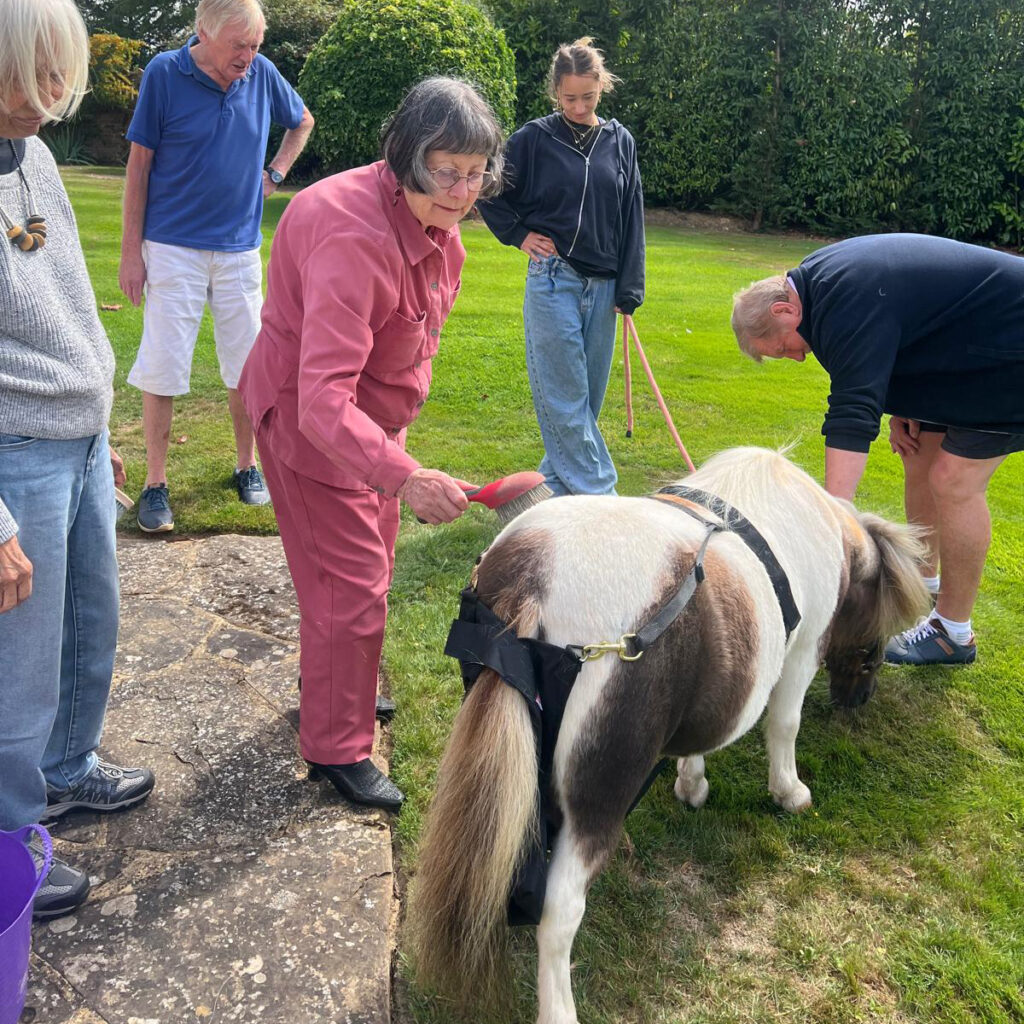
There is a growing body of evidence to suggest that animal-assisted therapies can have a positive effect on the health and wellbeing of people with dementia. This includes interactions with horses. Known as equine-assisted services, these activities can help improve communication, social skills, and confidence.
The Power of Connection
Activities like grooming, feeding, or even just watching horses can help people with early stage dementia feel more engaged and less stressed. Horses are intuitive animals that react to human energy. They are calm and non-judgmental. This creates a unique and peaceful environment for connection and helps reduce anxiety.
The sensory experience of being with horses is a huge part of the benefit. Being out in the countryside and focusing on the present moment with a horse can be very calming. This type of non-verbal interaction can be especially helpful for those who have difficulty communicating.
Take a moment to read an article from the Horse and House magazine of the benefits of horse therapy
At Tapestry Day Club, we were delighted to host a visit from Queenie, the Shetland pony and her owners Anna and Venetia.
The response from our guests was very positive, the ladies were more engaged with the grooming and petting while the gentlemen were more interested in what she could and how she did it being so small.
Queenie is going to continue her visits over the next few months, and will be welcomed into the homes of our hosts as she has no shoes and wears a ‘poo bag’.