and living with early stage dementia can present new challenges, but it doesn’t mean giving up your independence or the things you love. Did you know that technology can be a fantastic tool to help? It’s all about making daily life a little easier and keeping you connected.
You might have heard the term ‘assistive technology’. This simply refers to any item, from a simple calendar clock to a smart virtual assistant, that helps you stay independent and continue enjoying your favourite activities. It’s about finding the right tools to support you.
Here are some examples:
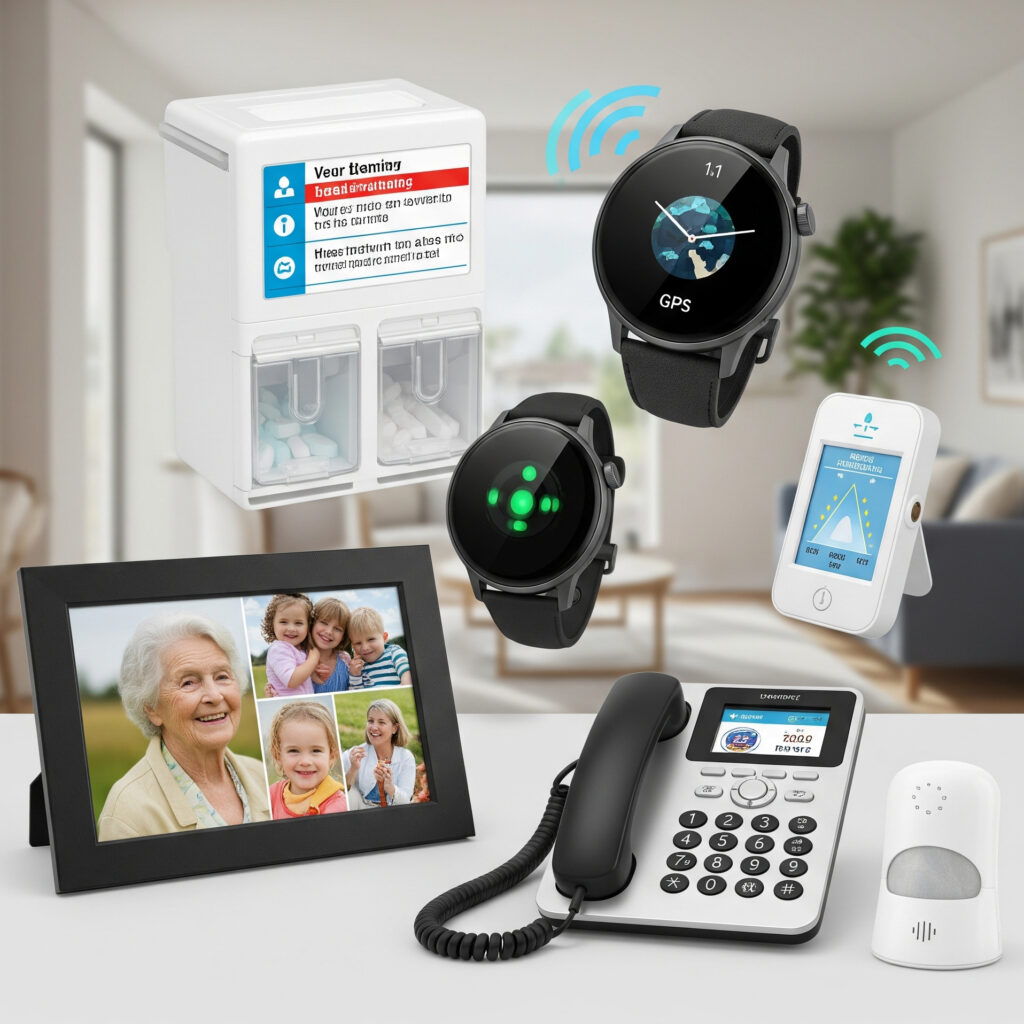
Calendar Clocks: these clocks display the date and day of the week, not just the time. Reminder Messages: imagine a friendly, recorded voice reminding you to grab your keys or lock the door as you leave the house. Locator Devices: we all misplace things. These devices have small electronic tags you attach to items like keys. If they go missing, a click of a button on the locator makes the tag beep, helping you find them quickly. Medication Reminders: beyond blister packs, there are automatic pill dispensers that chime when it’s time for your medication. Telephones: phones with larger buttons or picture dials can make calling loved ones easier. There are also mobile phones designed with fewer buttons and a simpler layout. Helpful Apps: if you use a smartphone or tablet, a world of helpful apps awaits. Calendars, reminders, and maps are just the start. Automatic Lights: these lights turn on when you enter a room, helping prevent trips and falls, especially in unfamiliar or dimly lit areas.
While many of these devices are readily available to buy, it’s a good idea to chat with a professional who can help you find what genuinely suits your needs. Visiting the Alzheimer’s Society website for further advice.